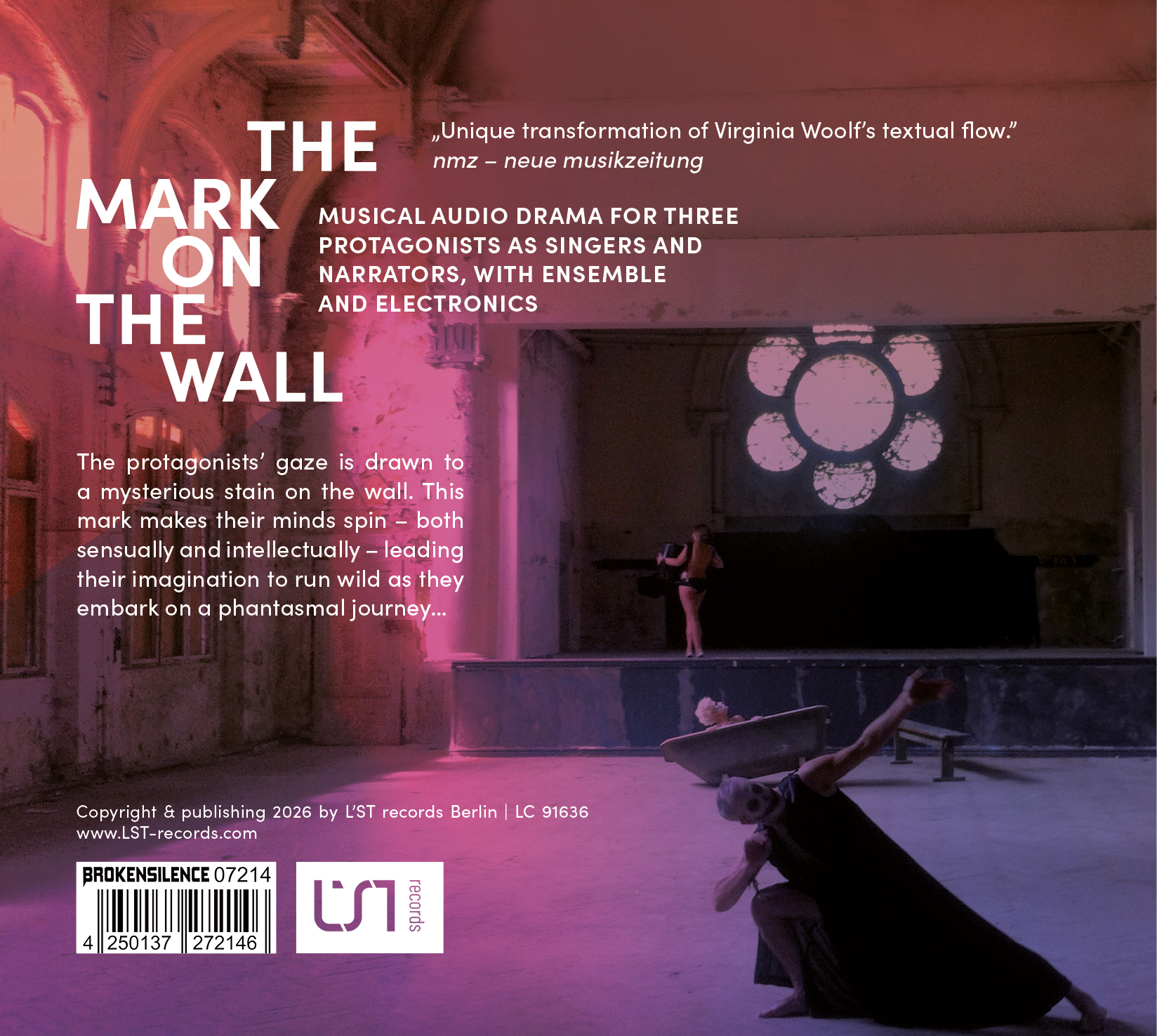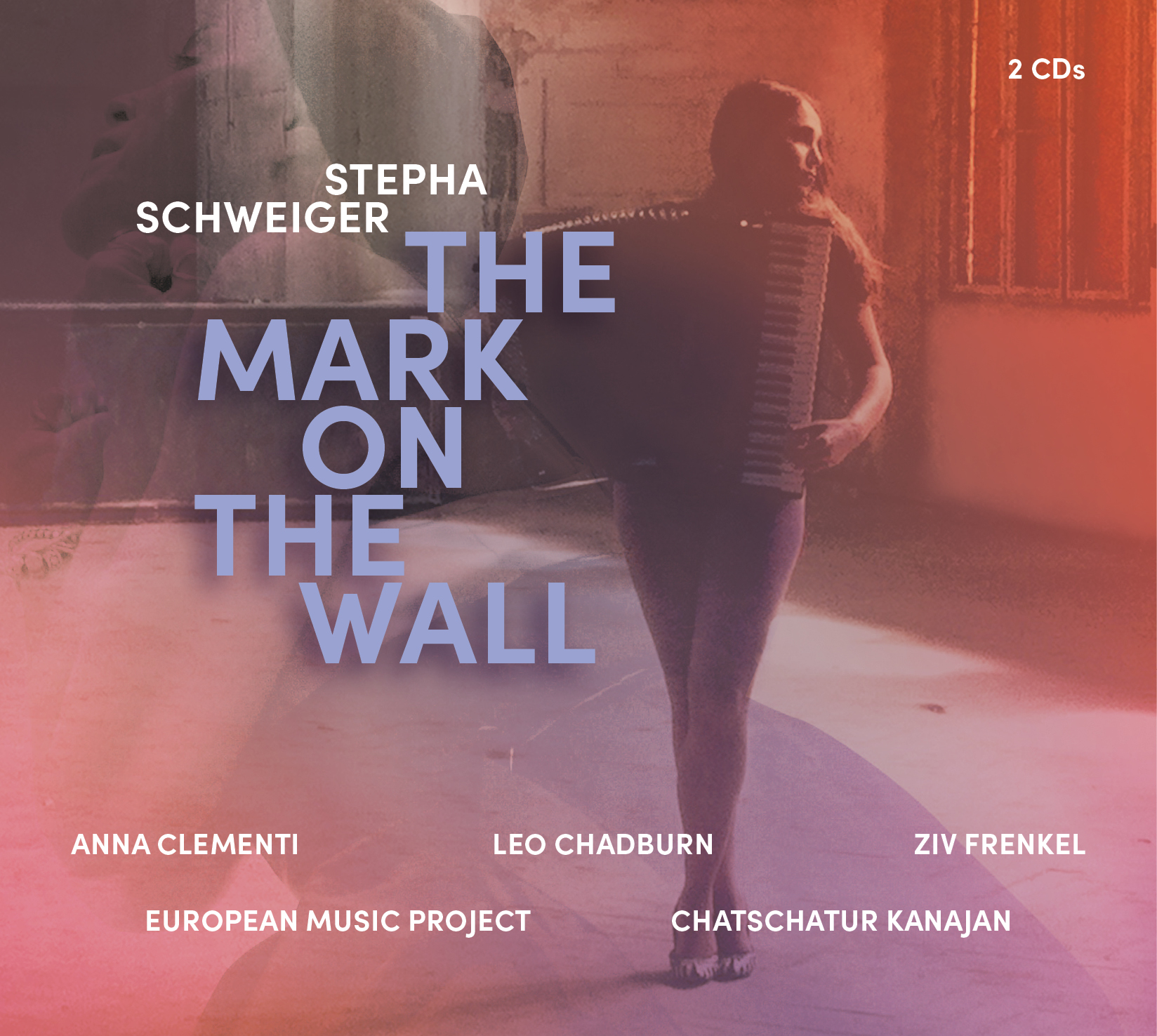
A stream of thought, an inner monologue that is expressed through the music – an awakening:In The Mark on the Wall, Stepha Schweiger reimagines Virginia Woolf’siconic 1917 stream-of-consciousness short story as a musical experience of rare depth and evocative force. Overthe course of the story, the first-person narrator is sitting in an armchair during the seemingly never-ending stretch of time following afternoon tea, pondering on the nature of a small object on the wall, which ultimately turns out to be a snail right at the very end only when another person enters the room. As the action unfolds, the narrator’s mind wanders repeatedly, and eventually – far removed from the reality of war – they become completely immersed in their daydream.
The work is musically underpinned by the clarinet, accordion, electric guitar,drums, piano, viola, double bass and electronics. The renowned vocal artist Anna Clementi performs the score part composed especially for her, alongside the outstanding London-based vocal performer Leo Chadburn and Ziv Frenkel. All three depict different facets of the first-person narrator. Leo Chadburn acts as Anna Clementi’s vocal alter ego. Ziv Frenkel, the dancer on stage, speaks his only words of the entire piece during a climactic moment towards the end of Act IV: “The Mark on the Wall”. This sentence feels like a juncture of profound stillness, before leading to the finale of the daydream – a moment to drift even deeper and immerse oneself completely in nature.
The natural dimension at the end of the story finds its counterpart in the tuning of the instruments. From the midpoint of the musical action onwards, the players ever so slightly detune individual strings on the electric guitar, viola and double bass – while the piece continues, effectively integrated into the composition – almost imperceptibly shifting towards a specific natural tuning. The score parts for the other instruments and the singer were adjusted to match this tuning, while the pitch-fixed piano is noisily played by striking the body rather than the keys,before its sound finally fades away completely.
Schweiger’s composition stays true to the sequence of the original text: delicately structured into five acts that flow almost seamlessly into one another, tracing the narrative shifts ofVirginia Woolf and allowing them to flow thoughtfully into musical spaces of varying breadth and duration. In doing so, the emergence of insight unfolds inslow motion – tentative, dreamlike, seismographic. The musical style draws upon both traditions and contemporary trends, while remaining consistently open, purposeful and forward-looking in its pursuit of sound and transformation. The short story is reinterpreted by Stepha Schweiger as an exciting, immersive audio drama with textures that never fail to surprise, while setting it in a futuristic context.